SWC75
Bored Historian
- Joined
- Aug 26, 2011
- Messages
- 34,337
- Like
- 66,951
1941
No controversy here. This was basically a wire-to-wire job by Minnesota, their 5th national championship since 1934. Texas briefly took over #1 in the November 3rd poll only to be tied by Baylor and then defeated by TCU. The Golden Gophers jumped back up to #1 and stayed there the rest of the year. There was a challenge from Duke, who had their last great team of the Wallace Wade era, 9and the last Duke team to contend for a national championship). The Blue Devils went 9-0-0 and were in the top 5 all year, rising to #2 in the final poll. While Minnesota, like all Big Ten teams in that era, stayed home, Duke ‘went’ to the Rose Bowl. Because of post Pearl Harbor concerns about large gatherings on the West Coast, the Rose Bowl that year was not held in Pasadena. Instead, Duke hosted it in Durham, taking on #12 Oregon State, 7-2, who upset them in their own stadium, 20-16. It is still Oregon State’s only Rose Bowl win- and it wasn’t in the Rose Bowl!
The only other unbeaten team was Frank Leahy’s first Notre Dame team, who was tied 0-0 by Army, (foreshadowing!) in their 6th game. The Irish started out ranked #8 and never got past #4 until the final poll. They wound up 8-0-1 (189-64) and ranked #3 but were not judged to be a national champion by any of the NCAA’s recognized sources. Idiosyncratically, Berryman and Williamson voted for 7-1-1, 4th ranked Texas while Houlgate chose 9-2-0 #20 ranked Alabama. The other 11 selectors chose Minnesota as #1 and that’s clearly the proper choice.
For the record, the Golden Gophers had a record of 8-0-0, outscored their opponents 186-38 (23-5). Those opponents were all major colleges. Two of them had winning records, (total: 31-35-1, .470). Two of the were ranked: they beat #5 Michigan 7-0 and #11 Northwestern 8-7Their PDR was 1.50. They were the best team 4 of their opponents played and second best for the other four. Like Wallace Wade at Duke, Bernie Bierman would have a difficult time putting his powerhouse back together after the war. Wade retired in 1950 after his postwar teams went 25-17-4. Bierman did the same thing at the same time after going 30-23-1 in the post war years. Minnesota would have one more flirtation with a national championship in 1960 but that’s been it. Duke has never made a run at #1 in the post war era. But both were great powers at one time.
1942
The strangest day in college football history was November 28, 1942. Top ranked Boston College, 8-0-0, (249-19), was expected to have an easy time with 4-4-1 Holy Cross. #2 Georgia Tech, 9-0-0 (212-39) was expected to have a hard time with #5 Georgia, 9-1-0 (333-76), who didn’t look so good in losing to 4-4-1 Auburn 13-27 the previous week. Teletype operators around the country had to send confirmation requests when they heard the score of these games. The #1 ranked team in the country had lost 12-55 and the #2 ranked team had lost 0-34!
The New York Times Arthur Dailey wrote of the Boston College game: “This had to be seen to be believed. Boston was almost completely impotent.“ Per “Football’s Unforgettable games” by Harold Claassen, “When the contest began, the Eagles were tense. The Crusaders were loose and alert. More than that, they were exceptionally well prepared. Scouting reports told (Coach Ank) Scanlon that BC employed a full charge, gambling defense. The Eagles led the nation in rushing defense with a sensationally low yield of 27 yards a game. Eagle tackle Bouley led the charge and was the player for whom the Crusaders built the better mousetrap. Holy Cross worked it to perfection, capitalizing on Bouley’s quick charge. The Crusaders trapped the tackles all day behind 225 pound freshman George Connor…Whipped to a fever pitch for the job at hand, Holly Cross came out hitting hard and never let up on the pressure.” Holy Cross had an impressive 20-6 lead at the half, then crushed the Eagles 35-6 in the second half, opening with 5 unanswered touchdowns BC got a last, truly meaningless score against 4th stringers. Fans had to wonder which team was actually ranked #1. Holy Cross only outgained BC 335-280 but were the beneficiaries of no less than 10 turnovers.
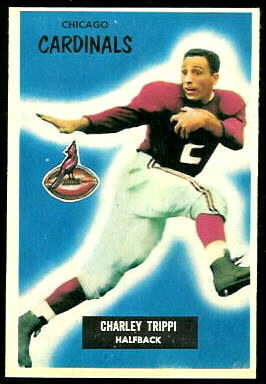
In Athens, Georgia, the Bulldogs got off to a bad start, fumbling the opening kickoff. But their defense held and they drove into Tech territory before family having to punt. Frank Sinkwich picked off a pass and Charley Trippi threw to Van Davis for a touchdown and the rout was on. A 92 yard drive made it 14-0. In the second quarter Trippi ran 87 yards for a score to make it 20-0 at halftime. In the third quarter, Trippi passed 42 yards to David and Clyde Ehrhardt had a pick-six from 27 yards out. It was 34-0 with an entire quarter to go. Georgia coasted to win by that score and earn a trip to the coast, (where fears of a Japanese attack had settled down. Georgia outgained Tech 492 yards to 150 and had 20 first downs to 8, so this was physically a bigger beating that the HC-BC game, which was about turnovers. .
Both Boston College and Georgia Tech went on to lose bowl games: the Eagles to Alabama 21-37 in the Orange Bowl and the Yellow Jackets to Texas 7-14 in the Cotton Bowl. The Yellow Jackets would be back but this was the last time Boston College made a run at the national championship.
Boston College had scheduled a party at the Coconut Grove night club in Boston for that evening to celebrate their national championship after their expected win over the Crusaders. They of course cancelled and that was a good thing because that was the night the Coconut Grove burned down, killing 492 people:
Cocoanut Grove fire - Wikipedia
Losing a national championship had saved their lives.
Paul Brown had been hired away from Massillon High School in Ohio to replace Francis “Close the Gates of Mercy” Schmidt at Ohio State in 1941. Mr. Schmidt loved to run up scores like 76-0 over Western Reserve, 87-7 over Drake, 60-0 over a fading NYU and 61-0 over a dying Chicago program. But he’d had the Gates of Mercy closed on him by Tom Harmon and Michigan, 0-40 – in the big horseshoe- in what proved to be his last game in 1940. Brown took over Schmidt’s 4-4 team and went 6-1-1 in his first year, tying Michigan at Michigan, 20-20.
His team was #1 in the first poll of 1942, on October 12. They remained #1 until upset by Wisconsin, 7-17 on Halloween. The Badgers had been tied 7-7 by Notre Dame but were otherwise undefeated. Vautravers: “This was the game of the year, but luckily for Ohio State, it didn't end up deciding the mythical national championship. Unluckily for them, they took an old train to the game, one that had not been used for years-- and its drinking water had not been changed out for years. Half the team was hit with dysentery and either could not play, or could not play at full strength. A stadium-record crowd of 45,000 showed up at Camp Randall for a Halloween game that was broadcast nationally and around the world-- the largest radio audience for a football game to this date.
Crazylegs Hirsch got loose for 59 yards to set up the game's first score, a Pat Harder plunge. Harder added the extra point, and later kicked a 37 yard field goal for a 10-0 halftime lead. That was pretty much the game, but Ohio State drove 96 yards for a touchdown in the 4th quarter to momentarily close the gap to a dramatic 10-7. Wisconsin, however, answered immediately, driving 66 yards for the clinching touchdown. Hirsch hit Dave Schreiner for 12 yards, then for 14 to paydirt, and Harder hit the extra point for the 17-7 final score. This was Wisconsin's first win over Ohio State since 1918.”
Georgia moved up to #1 with the Badgers #2, Tech #3, a 4-1-1 Notre Dame team #4, BC #5 and the Buckeyes falling all the way to #6. The Bulldogs than swamped Florida 75-0 while Wisconsin lost to a 5-2 Iowa team, 0-6. Tech crushed Kentucky 47-7 while ND beat #19 Army 13-0. BC handled Temple 28-0 while State plundered Pitt 59-19. Now Georgia and Georgia Tech were 1-2, followed by BC while Wisconsin dropped to #7 behind Alabama and Michigan. Ohio State was all the way down to #10 in a November 9 poll Notre Dame then lost to Michigan while Georgia Tech beat Alabama. The Buckeyes whipped #13 Illinois 44-20 and jumped up to #5 in the next poll, which had Georgia, Georgia Tech, BC and Michigan ahead of them with Wisconsin still at #7.
Then Auburn beat Georgia . And they dominated, out-rushing the Bulldogs 335-37, even though they never completed a pass. Georgia had 190 yards passing. Georgia actually scored first but Auburn scored 20 consecutive points and stripped Sinkwich of the ball for a clinching score in the final minutes. Strangely, #2 Georgia Tech didn’t move up, perhaps because they only beat Florida 20-7. Boston College crushed Boston U. 37-0 and moved into the #1 slot, a late switch that might have won them a national title- and put them in the Coconut Grove- (since there was only one more poll) if they’d taken care of business against the Crusaders. Ohio State beat Michigan 21-7 and moved up to #3, which put them in the #1 spot after the two crushing upsets of BC and Tech. The Buckeyes then beat a top service team, Iowa Pre-Flight 41-12 and wound up #1 with Georgia #2 and Wisconsin #3. All had one loss, as did Georgia Tech, Boston College and Tennessee, who was 8-1-1. There was one undefeated team, Tulsa who had gone 10-0-0 and outscored their opposition, 427-32. They led the country in both scoring offense and defense. Their schedule was much weaker than the other contenders but they’d risen to #4 in the country after being unranked at the beginning of the season.
Then came the bowls. Ohio State and Wisconsin, being Big Ten teams, stayed home. Georgia got their first ever trip to Pasadena, where they beat 7-3-0 UCLA team 9-0. The Bulldogs dominated more than that indicates, outgaining their hosts, 379-158 and gaining 24 first downs to 5 and running 96 plays to 47. Sinkwich, the Heisman Trophy winner, had two sprained ankles and only played sporadically but Charley Trippi ran for 130 yards and threw for 96. Unfortunately drives ended at the UCLA 2 and 10 on downs and a fumble at the 1 yard line, followed by a safety. That kept the score down. Tennessee ended Tulsa’s dream season 14-7, holding them to -39 yards rushing. Still Tulsa was ahead at the half, 7-6 and quarterback Glenn Dobbs, who would coach Jerry Rhome and Bill Anderson to passing records in the 60’s at the same school, completed a 46 yard pass in the last minute to the Tennessee 12, only to be intercepted on the 3. Georgia Tech lost to 8-2-0 Texas in the Cotton Bowl by the same score. Boston College fell to 8-2-0 Texas in the Orange Bowl, 21-37.
Football Bowl games 1943
Logic dictates that this would be about Ohio State vs. Georgia but I am including Wisconsin because they beat Ohio State. The only thing separating them from the top two is a tie and the fact that beat one of the top two puts them in the conversation.
I’ve been linking to Richard Vautravers site but to the section in which he discusses how the AP poll would have changed after the polls. Often he has little to say about #1 vs. #2 in that section. I should have been linking you to his section that is specifically about the national championship and here is his article about 1942:
1942 College Football National Championship
He’s dismissive of Wisconsin, not just for having a loss and a tie but because of a couple of poor performances and the fact that Ohio State wasn’t fully healthy when they played them. He’s willing to entertain the notion that Ohio State and Georgia should be co-national champions but not that Georgia should be ranked ahead of Ohio State.
It’s interesting that he views Ohio State as being a “B” list power until Paul Brown became their coach, when they became an “A” list power. It’s the first time I’ve heard that and I don’t get that impression from other sources. Bill Libby in “Champions of college football lists the top 5 national championship contenders for each year from 1901-35 and Ohio State makes his list four times from 1916-33. Notre Dame’s upset win in Columbus in 1935 is regarded as the greatest game and one of the biggest upsets of the 1930’s. The 1942 Big Ten title was the Buckeye’s 6th. That doesn’t sound like “B” list. On the other hand, Georgia and Wisconsin had not had much acquaintance with the national championship. Wisconsin had not been this good since before WWI. Georgia, who had an up and down history, became the first SEC team to be ranked #1 in a weekly AP poll in on 11/ 2/42.
A comment on military teams, like Iowa Pre-Flight, Great Lakes Naval Training Station, Del Monte Pre-Flight, Bainbridge Naval Training Station, Randolph Field, Norman Naval Training Station, El Toro Marines, Fort Pierce, St. Mary’s pre-flight, 2nd Air Force, all of whom showed up in the rankings from 1942-44. They played four year schools during that time and their games are normally counted in the records of the four year schools. Randolph Field even played in the Cotton Bowl. But they are not four year schools. I don’t think they belong in the rankings. There should have been separate rankings for these teams and separate bowl games, (there were in 1944: Randolph Field beat 2nd Air Force 13-6 in the Treasury Bowl)> To me their games against college teams were exhibition games that shouldn’t count against the college team’s record. (Vautravers agrees, by the way.) These service teams were often like college all-star teams where guys who had been football, (or basketball) stars would be assigned to one location so they could play on the team there and win games for some general or admiral. Athletes in the service often spent the war doing this more than fighting to “help morale”.
Of course the waters are somewhat muddied by the fact that colleges could sometimes get training programs assigned to their campuses and top players could wind up playing for their teams, (Elroy Hirsch played for Wisconsin one year, then entered the service and found himself playing for Michigan the next). And I’ll be talking about the means that Army used to become a Megapower will be the subject of a discussion in my next post. But still, a four year college is a four year college and a military installation is a military installation, so I won’t treat the military teams as college teams and I will consider their games against college teams to be exhibitions. I will also not include those games in figuring the PDF.
Also, I’m adding these non-NCAA recognized selectors I found on the internet. I suspect the NCAA doesn’t recognize them because they consider margin of victory:
Time travel: Entropy Sports Rankings and Predictions
Dolphin: Dolphin Rankings
Howell: NCAA Division IA Football Power Ratings
Sorenson: Men's College Football - Ratings by Soren Sorensen
Square Gear: Square Gear - Football Ratings
Taylor: NCAA Division I Football Champions
Waits: Ray Waits' Historical Retrodictive Ratings
Wilson: David Wilson's Retro-Ratings
Ohio State, coached by Paul Browns, played 10 teams, 2 of them military teams and the rest major colleges. They had a record of 7-1-0 against the eight major colleges, who had a combined record 38-39-2 (.494), mostly thanks to 1-8 Purdue and 1-9 Northwestern. They outscored the major colleges 237-102 (30-13).Four of their major college opponents had winning records. They played two teams that wound in the final Top 20 rankings. They lost to third ranked Wisconsin 7-17 but beat 9th ranked Michigan 21-7. Their PDR was 2.13. They were the best team four of their major college opponents played. They were the fifth best team vs. Wisconsin.
Heisman Trophy Winner: Les Horvath HB/QB (in 1944)
Hall of Famers: Les Horvath HB/QB, Bill Willis T (Paul brown is not in the college HOF, presumably due to the briefness of his tenure.)
All Americans: None that year.
Future AA’s: Jack Dugger E, 1944, Bill Hackett G, 1944 Les Horvath, HB/QB, 1944
Future Pros: Hal Dean, G/LB Rams 1947-49, Jack Dugger, T/DE Buffalo AAFC, Lions and Bears, 1946-49, Gene Fekete FB/LB 1946 Browns, Les Horvath HB/QB 1947-49 Rams, Browns, Lin Houston G 1946-53 Browns, Dante Lavelli E 1946-56 Browns, Don McCafferty E, Giants 1946, Paul Sarringhaus, Halfback Cardinals, Lions, 1946-48, Cecil Souders E/T 1947-49 Lions, Bill Willis G 1946-53
(You can see that part of Paul Brown’s success with the Cleveland Browns was a carry-over of his work at Ohio State. And I’ll bet a lot of those Buckeyes came from Massillon High School. )
The Buckeyes were 4th in the country in yards gained with 397.5 per game and third in rushing with 283.3 YPG.
Ohio State was chosen as the #1 team by AP, Billingsley, Boand, Dunkel, Football research, and also by Non-NCAA selectors Taylor and Wilson. Robert Leckie, author of one of two book I have entitled “The Story of Football”, who called the Wisconsin loss a “fluke”.
http://At their request, this netwo...cle/Year-2-at-OSU-The-1942-Buckeyes-105008560
Georgia, coached by Wally Butts, played 12 teams, two of them small colleges and one of them military, leaving 9 games against major college teams against home they had a record of 8-1-0. Those schools included 4 teams with winning records and all of those were ranked. They beat #5 Georgia Tech 34-0, #10 Alabama 21-10 and #13 UCLA 9-0 but lost to #16 Auburn 13-27. They outscored their major college opponents 287-63 (32-7). Their PDR was 2.44, largely because their performance vs. Auburn was the 8th best against them that year.
Heisman Trophy winner: Frankie Sinkwich HB (in 1942)
Hall of Famers: Coach Wally Butts, Frankie Sinkwich HB, Charley Trippi HB
All-Americans: Frankie Sinkwich, HB
Future AA’s: Charley Trippi, HB, 1946
Future Pros: Frankie Sinkwich HB played for Lions 1943-44, New York Yankees (AAFC) in 1946-47 and Baltimore Colts (AAFC) 1947; Jim Magee C/T 1944-46 Boston Yankees, Ken Keuper B Packers and Giants 1945-49, Gene Ellenson T 1946 Miami Seahawks (AAFC), Andy Dudish HB Buffalo Bills and Baltimore Colts AAFC and Lions 1946-48; Fay King E Buffalo Bills and Chicago Rockets/Hornets (AAFC) 1946-49; Clyde Ehrhardt C 1946-49; Lamar Davis, E Miami Seahawks and Baltimore Colts (AAFC) 1946-49.
(Sinkwich grew up in Youngstown Ohio and always wanted to play for Ohio State but Butts convinced him to go to Georgia at the least minute.)
Georgia led the nation in yards with 429.5. They were 10th in rushing with 238.5.
Georgia was the choice for #1 by NCAA recognized selectors: Berryman, DeVold, Houlgate, Litkenhaus, poling and Williamson. They were also chosen by Non-NCAA selectors Time Travel, Dolphin, Howell, Sorenson, Waits and Square Gear. Bill Libby, in his book “Champions of College Football” said “Georgia reached the top in 1942….the Bulldogs 11 victories in 12 stats seems to have bene the best record. The AP already had picked Ohio State but most selectors turned to Georgia after the Bulldogs stopped UCLA in the Rose Bowl. “
Wreck Tech - UGA vs GT 1942
Wisconsin, coached by Harry Stuhldreher, played 10 teams, two of whom were military teams. They played 8 major colleges and had a record of 6-1-1. They had a combined record of 44-33-3 (.571), which also included 1-8 Purdue and 1-9 Northwestern. In fact, those were their only common opponents with Ohio State who beat then by a combined 46-6 compared to 33-19 for Wisconsin. Neither team had a common opponent with Georgia. The other six of their major college opponents all had winning records. Three of them were ranked. Wisconsin beat #1 Ohio State 17-7, tied #6 Notre Dame 7-7 and beat #19 Minnesota 20-6. Their PDR was 3.125. They were the best team three of their opponents played, the 6th best team two of them, (Iowa and Northwestern) played and the 5th best team Purdue played. Consistency was their problem: they rose to the occasion against good teams but didn’t beat the lesser teams the way they should.
Heisman Trophy winners: none, on this team.
Hall of Fame: Elroy "Crazy Legs" Hirsch HB (Harry Stuhldreher is in the Hall as a player for Notre Dame: he was one of the Four Horsemen.)
All-Americans: Dave Schreiner E
Future AAs: none
Future Pros: Elroy "Crazy Legs" Hirsch HB/FL Chicago Rockets and (AAFC) and Rams 1946-57, Pat Harder FB/LB Cardinals and Lions 1956-53, Len Calligaro LB Giants 1944, Lloyd Wasserbach T Chicago Rockets (AAFC) 1946-47; Bill Schroeder HB Chicago Rockets (AAFC) 1946-47; Jack Mead E, Giants 1946-47; Tom Farris QB, Bears and Chicago Rockets (AAFC) 1946-48; Evan Vogds G Chicago Rockets (AAFC) and Packers 1946-49 and George Hekkers T Miami Seahawks and Baltimore Colts (AAFC) Lions 1946-49.
Wisconsin didn’t make the top ten in any stat. They were selected #1 by the Helms Foundation but nobody else.
Season in Time: WIsconsin Badgers 1942
So we have three teams, all of whom had a bad game and lost to a team with a winning record, (Iowa was 6-4). Ohio State’s loss was to the best of those three opponents but it was also to a fellow contender, Wisconsin. But half their team had dysentery going into that game due to the “bad water” on the train. Does that negate it? Or is that any different than having a bunch of injured players? Should Wisconsin’s tie with Notre Dame take them out of the equation?
You can avoid that question if you think Georgia was better that either of them and I think they were. Frankie Sinkwich and Charley Trippi were both all-time greats and they were in the Bulldog’s backfield together. They would have been a load for either the Buckeyes or the Badgers.
So….Who is #1 for 1942?
No controversy here. This was basically a wire-to-wire job by Minnesota, their 5th national championship since 1934. Texas briefly took over #1 in the November 3rd poll only to be tied by Baylor and then defeated by TCU. The Golden Gophers jumped back up to #1 and stayed there the rest of the year. There was a challenge from Duke, who had their last great team of the Wallace Wade era, 9and the last Duke team to contend for a national championship). The Blue Devils went 9-0-0 and were in the top 5 all year, rising to #2 in the final poll. While Minnesota, like all Big Ten teams in that era, stayed home, Duke ‘went’ to the Rose Bowl. Because of post Pearl Harbor concerns about large gatherings on the West Coast, the Rose Bowl that year was not held in Pasadena. Instead, Duke hosted it in Durham, taking on #12 Oregon State, 7-2, who upset them in their own stadium, 20-16. It is still Oregon State’s only Rose Bowl win- and it wasn’t in the Rose Bowl!
The only other unbeaten team was Frank Leahy’s first Notre Dame team, who was tied 0-0 by Army, (foreshadowing!) in their 6th game. The Irish started out ranked #8 and never got past #4 until the final poll. They wound up 8-0-1 (189-64) and ranked #3 but were not judged to be a national champion by any of the NCAA’s recognized sources. Idiosyncratically, Berryman and Williamson voted for 7-1-1, 4th ranked Texas while Houlgate chose 9-2-0 #20 ranked Alabama. The other 11 selectors chose Minnesota as #1 and that’s clearly the proper choice.
For the record, the Golden Gophers had a record of 8-0-0, outscored their opponents 186-38 (23-5). Those opponents were all major colleges. Two of them had winning records, (total: 31-35-1, .470). Two of the were ranked: they beat #5 Michigan 7-0 and #11 Northwestern 8-7Their PDR was 1.50. They were the best team 4 of their opponents played and second best for the other four. Like Wallace Wade at Duke, Bernie Bierman would have a difficult time putting his powerhouse back together after the war. Wade retired in 1950 after his postwar teams went 25-17-4. Bierman did the same thing at the same time after going 30-23-1 in the post war years. Minnesota would have one more flirtation with a national championship in 1960 but that’s been it. Duke has never made a run at #1 in the post war era. But both were great powers at one time.
1942
The strangest day in college football history was November 28, 1942. Top ranked Boston College, 8-0-0, (249-19), was expected to have an easy time with 4-4-1 Holy Cross. #2 Georgia Tech, 9-0-0 (212-39) was expected to have a hard time with #5 Georgia, 9-1-0 (333-76), who didn’t look so good in losing to 4-4-1 Auburn 13-27 the previous week. Teletype operators around the country had to send confirmation requests when they heard the score of these games. The #1 ranked team in the country had lost 12-55 and the #2 ranked team had lost 0-34!
The New York Times Arthur Dailey wrote of the Boston College game: “This had to be seen to be believed. Boston was almost completely impotent.“ Per “Football’s Unforgettable games” by Harold Claassen, “When the contest began, the Eagles were tense. The Crusaders were loose and alert. More than that, they were exceptionally well prepared. Scouting reports told (Coach Ank) Scanlon that BC employed a full charge, gambling defense. The Eagles led the nation in rushing defense with a sensationally low yield of 27 yards a game. Eagle tackle Bouley led the charge and was the player for whom the Crusaders built the better mousetrap. Holy Cross worked it to perfection, capitalizing on Bouley’s quick charge. The Crusaders trapped the tackles all day behind 225 pound freshman George Connor…Whipped to a fever pitch for the job at hand, Holly Cross came out hitting hard and never let up on the pressure.” Holy Cross had an impressive 20-6 lead at the half, then crushed the Eagles 35-6 in the second half, opening with 5 unanswered touchdowns BC got a last, truly meaningless score against 4th stringers. Fans had to wonder which team was actually ranked #1. Holy Cross only outgained BC 335-280 but were the beneficiaries of no less than 10 turnovers.
In Athens, Georgia, the Bulldogs got off to a bad start, fumbling the opening kickoff. But their defense held and they drove into Tech territory before family having to punt. Frank Sinkwich picked off a pass and Charley Trippi threw to Van Davis for a touchdown and the rout was on. A 92 yard drive made it 14-0. In the second quarter Trippi ran 87 yards for a score to make it 20-0 at halftime. In the third quarter, Trippi passed 42 yards to David and Clyde Ehrhardt had a pick-six from 27 yards out. It was 34-0 with an entire quarter to go. Georgia coasted to win by that score and earn a trip to the coast, (where fears of a Japanese attack had settled down. Georgia outgained Tech 492 yards to 150 and had 20 first downs to 8, so this was physically a bigger beating that the HC-BC game, which was about turnovers. .
Both Boston College and Georgia Tech went on to lose bowl games: the Eagles to Alabama 21-37 in the Orange Bowl and the Yellow Jackets to Texas 7-14 in the Cotton Bowl. The Yellow Jackets would be back but this was the last time Boston College made a run at the national championship.
Boston College had scheduled a party at the Coconut Grove night club in Boston for that evening to celebrate their national championship after their expected win over the Crusaders. They of course cancelled and that was a good thing because that was the night the Coconut Grove burned down, killing 492 people:
Cocoanut Grove fire - Wikipedia
Losing a national championship had saved their lives.
Paul Brown had been hired away from Massillon High School in Ohio to replace Francis “Close the Gates of Mercy” Schmidt at Ohio State in 1941. Mr. Schmidt loved to run up scores like 76-0 over Western Reserve, 87-7 over Drake, 60-0 over a fading NYU and 61-0 over a dying Chicago program. But he’d had the Gates of Mercy closed on him by Tom Harmon and Michigan, 0-40 – in the big horseshoe- in what proved to be his last game in 1940. Brown took over Schmidt’s 4-4 team and went 6-1-1 in his first year, tying Michigan at Michigan, 20-20.
His team was #1 in the first poll of 1942, on October 12. They remained #1 until upset by Wisconsin, 7-17 on Halloween. The Badgers had been tied 7-7 by Notre Dame but were otherwise undefeated. Vautravers: “This was the game of the year, but luckily for Ohio State, it didn't end up deciding the mythical national championship. Unluckily for them, they took an old train to the game, one that had not been used for years-- and its drinking water had not been changed out for years. Half the team was hit with dysentery and either could not play, or could not play at full strength. A stadium-record crowd of 45,000 showed up at Camp Randall for a Halloween game that was broadcast nationally and around the world-- the largest radio audience for a football game to this date.
Crazylegs Hirsch got loose for 59 yards to set up the game's first score, a Pat Harder plunge. Harder added the extra point, and later kicked a 37 yard field goal for a 10-0 halftime lead. That was pretty much the game, but Ohio State drove 96 yards for a touchdown in the 4th quarter to momentarily close the gap to a dramatic 10-7. Wisconsin, however, answered immediately, driving 66 yards for the clinching touchdown. Hirsch hit Dave Schreiner for 12 yards, then for 14 to paydirt, and Harder hit the extra point for the 17-7 final score. This was Wisconsin's first win over Ohio State since 1918.”
Georgia moved up to #1 with the Badgers #2, Tech #3, a 4-1-1 Notre Dame team #4, BC #5 and the Buckeyes falling all the way to #6. The Bulldogs than swamped Florida 75-0 while Wisconsin lost to a 5-2 Iowa team, 0-6. Tech crushed Kentucky 47-7 while ND beat #19 Army 13-0. BC handled Temple 28-0 while State plundered Pitt 59-19. Now Georgia and Georgia Tech were 1-2, followed by BC while Wisconsin dropped to #7 behind Alabama and Michigan. Ohio State was all the way down to #10 in a November 9 poll Notre Dame then lost to Michigan while Georgia Tech beat Alabama. The Buckeyes whipped #13 Illinois 44-20 and jumped up to #5 in the next poll, which had Georgia, Georgia Tech, BC and Michigan ahead of them with Wisconsin still at #7.
Then Auburn beat Georgia . And they dominated, out-rushing the Bulldogs 335-37, even though they never completed a pass. Georgia had 190 yards passing. Georgia actually scored first but Auburn scored 20 consecutive points and stripped Sinkwich of the ball for a clinching score in the final minutes. Strangely, #2 Georgia Tech didn’t move up, perhaps because they only beat Florida 20-7. Boston College crushed Boston U. 37-0 and moved into the #1 slot, a late switch that might have won them a national title- and put them in the Coconut Grove- (since there was only one more poll) if they’d taken care of business against the Crusaders. Ohio State beat Michigan 21-7 and moved up to #3, which put them in the #1 spot after the two crushing upsets of BC and Tech. The Buckeyes then beat a top service team, Iowa Pre-Flight 41-12 and wound up #1 with Georgia #2 and Wisconsin #3. All had one loss, as did Georgia Tech, Boston College and Tennessee, who was 8-1-1. There was one undefeated team, Tulsa who had gone 10-0-0 and outscored their opposition, 427-32. They led the country in both scoring offense and defense. Their schedule was much weaker than the other contenders but they’d risen to #4 in the country after being unranked at the beginning of the season.
Then came the bowls. Ohio State and Wisconsin, being Big Ten teams, stayed home. Georgia got their first ever trip to Pasadena, where they beat 7-3-0 UCLA team 9-0. The Bulldogs dominated more than that indicates, outgaining their hosts, 379-158 and gaining 24 first downs to 5 and running 96 plays to 47. Sinkwich, the Heisman Trophy winner, had two sprained ankles and only played sporadically but Charley Trippi ran for 130 yards and threw for 96. Unfortunately drives ended at the UCLA 2 and 10 on downs and a fumble at the 1 yard line, followed by a safety. That kept the score down. Tennessee ended Tulsa’s dream season 14-7, holding them to -39 yards rushing. Still Tulsa was ahead at the half, 7-6 and quarterback Glenn Dobbs, who would coach Jerry Rhome and Bill Anderson to passing records in the 60’s at the same school, completed a 46 yard pass in the last minute to the Tennessee 12, only to be intercepted on the 3. Georgia Tech lost to 8-2-0 Texas in the Cotton Bowl by the same score. Boston College fell to 8-2-0 Texas in the Orange Bowl, 21-37.
Football Bowl games 1943
Logic dictates that this would be about Ohio State vs. Georgia but I am including Wisconsin because they beat Ohio State. The only thing separating them from the top two is a tie and the fact that beat one of the top two puts them in the conversation.
I’ve been linking to Richard Vautravers site but to the section in which he discusses how the AP poll would have changed after the polls. Often he has little to say about #1 vs. #2 in that section. I should have been linking you to his section that is specifically about the national championship and here is his article about 1942:
1942 College Football National Championship
He’s dismissive of Wisconsin, not just for having a loss and a tie but because of a couple of poor performances and the fact that Ohio State wasn’t fully healthy when they played them. He’s willing to entertain the notion that Ohio State and Georgia should be co-national champions but not that Georgia should be ranked ahead of Ohio State.
It’s interesting that he views Ohio State as being a “B” list power until Paul Brown became their coach, when they became an “A” list power. It’s the first time I’ve heard that and I don’t get that impression from other sources. Bill Libby in “Champions of college football lists the top 5 national championship contenders for each year from 1901-35 and Ohio State makes his list four times from 1916-33. Notre Dame’s upset win in Columbus in 1935 is regarded as the greatest game and one of the biggest upsets of the 1930’s. The 1942 Big Ten title was the Buckeye’s 6th. That doesn’t sound like “B” list. On the other hand, Georgia and Wisconsin had not had much acquaintance with the national championship. Wisconsin had not been this good since before WWI. Georgia, who had an up and down history, became the first SEC team to be ranked #1 in a weekly AP poll in on 11/ 2/42.
A comment on military teams, like Iowa Pre-Flight, Great Lakes Naval Training Station, Del Monte Pre-Flight, Bainbridge Naval Training Station, Randolph Field, Norman Naval Training Station, El Toro Marines, Fort Pierce, St. Mary’s pre-flight, 2nd Air Force, all of whom showed up in the rankings from 1942-44. They played four year schools during that time and their games are normally counted in the records of the four year schools. Randolph Field even played in the Cotton Bowl. But they are not four year schools. I don’t think they belong in the rankings. There should have been separate rankings for these teams and separate bowl games, (there were in 1944: Randolph Field beat 2nd Air Force 13-6 in the Treasury Bowl)> To me their games against college teams were exhibition games that shouldn’t count against the college team’s record. (Vautravers agrees, by the way.) These service teams were often like college all-star teams where guys who had been football, (or basketball) stars would be assigned to one location so they could play on the team there and win games for some general or admiral. Athletes in the service often spent the war doing this more than fighting to “help morale”.
Of course the waters are somewhat muddied by the fact that colleges could sometimes get training programs assigned to their campuses and top players could wind up playing for their teams, (Elroy Hirsch played for Wisconsin one year, then entered the service and found himself playing for Michigan the next). And I’ll be talking about the means that Army used to become a Megapower will be the subject of a discussion in my next post. But still, a four year college is a four year college and a military installation is a military installation, so I won’t treat the military teams as college teams and I will consider their games against college teams to be exhibitions. I will also not include those games in figuring the PDF.
Also, I’m adding these non-NCAA recognized selectors I found on the internet. I suspect the NCAA doesn’t recognize them because they consider margin of victory:
Time travel: Entropy Sports Rankings and Predictions
Dolphin: Dolphin Rankings
Howell: NCAA Division IA Football Power Ratings
Sorenson: Men's College Football - Ratings by Soren Sorensen
Square Gear: Square Gear - Football Ratings
Taylor: NCAA Division I Football Champions
Waits: Ray Waits' Historical Retrodictive Ratings
Wilson: David Wilson's Retro-Ratings
Ohio State, coached by Paul Browns, played 10 teams, 2 of them military teams and the rest major colleges. They had a record of 7-1-0 against the eight major colleges, who had a combined record 38-39-2 (.494), mostly thanks to 1-8 Purdue and 1-9 Northwestern. They outscored the major colleges 237-102 (30-13).Four of their major college opponents had winning records. They played two teams that wound in the final Top 20 rankings. They lost to third ranked Wisconsin 7-17 but beat 9th ranked Michigan 21-7. Their PDR was 2.13. They were the best team four of their major college opponents played. They were the fifth best team vs. Wisconsin.
Heisman Trophy Winner: Les Horvath HB/QB (in 1944)
Hall of Famers: Les Horvath HB/QB, Bill Willis T (Paul brown is not in the college HOF, presumably due to the briefness of his tenure.)
All Americans: None that year.
Future AA’s: Jack Dugger E, 1944, Bill Hackett G, 1944 Les Horvath, HB/QB, 1944
Future Pros: Hal Dean, G/LB Rams 1947-49, Jack Dugger, T/DE Buffalo AAFC, Lions and Bears, 1946-49, Gene Fekete FB/LB 1946 Browns, Les Horvath HB/QB 1947-49 Rams, Browns, Lin Houston G 1946-53 Browns, Dante Lavelli E 1946-56 Browns, Don McCafferty E, Giants 1946, Paul Sarringhaus, Halfback Cardinals, Lions, 1946-48, Cecil Souders E/T 1947-49 Lions, Bill Willis G 1946-53
(You can see that part of Paul Brown’s success with the Cleveland Browns was a carry-over of his work at Ohio State. And I’ll bet a lot of those Buckeyes came from Massillon High School. )
The Buckeyes were 4th in the country in yards gained with 397.5 per game and third in rushing with 283.3 YPG.
Ohio State was chosen as the #1 team by AP, Billingsley, Boand, Dunkel, Football research, and also by Non-NCAA selectors Taylor and Wilson. Robert Leckie, author of one of two book I have entitled “The Story of Football”, who called the Wisconsin loss a “fluke”.
http://At their request, this netwo...cle/Year-2-at-OSU-The-1942-Buckeyes-105008560
Georgia, coached by Wally Butts, played 12 teams, two of them small colleges and one of them military, leaving 9 games against major college teams against home they had a record of 8-1-0. Those schools included 4 teams with winning records and all of those were ranked. They beat #5 Georgia Tech 34-0, #10 Alabama 21-10 and #13 UCLA 9-0 but lost to #16 Auburn 13-27. They outscored their major college opponents 287-63 (32-7). Their PDR was 2.44, largely because their performance vs. Auburn was the 8th best against them that year.
Heisman Trophy winner: Frankie Sinkwich HB (in 1942)
Hall of Famers: Coach Wally Butts, Frankie Sinkwich HB, Charley Trippi HB
All-Americans: Frankie Sinkwich, HB
Future AA’s: Charley Trippi, HB, 1946
Future Pros: Frankie Sinkwich HB played for Lions 1943-44, New York Yankees (AAFC) in 1946-47 and Baltimore Colts (AAFC) 1947; Jim Magee C/T 1944-46 Boston Yankees, Ken Keuper B Packers and Giants 1945-49, Gene Ellenson T 1946 Miami Seahawks (AAFC), Andy Dudish HB Buffalo Bills and Baltimore Colts AAFC and Lions 1946-48; Fay King E Buffalo Bills and Chicago Rockets/Hornets (AAFC) 1946-49; Clyde Ehrhardt C 1946-49; Lamar Davis, E Miami Seahawks and Baltimore Colts (AAFC) 1946-49.
(Sinkwich grew up in Youngstown Ohio and always wanted to play for Ohio State but Butts convinced him to go to Georgia at the least minute.)
Georgia led the nation in yards with 429.5. They were 10th in rushing with 238.5.
Georgia was the choice for #1 by NCAA recognized selectors: Berryman, DeVold, Houlgate, Litkenhaus, poling and Williamson. They were also chosen by Non-NCAA selectors Time Travel, Dolphin, Howell, Sorenson, Waits and Square Gear. Bill Libby, in his book “Champions of College Football” said “Georgia reached the top in 1942….the Bulldogs 11 victories in 12 stats seems to have bene the best record. The AP already had picked Ohio State but most selectors turned to Georgia after the Bulldogs stopped UCLA in the Rose Bowl. “
Wreck Tech - UGA vs GT 1942
Wisconsin, coached by Harry Stuhldreher, played 10 teams, two of whom were military teams. They played 8 major colleges and had a record of 6-1-1. They had a combined record of 44-33-3 (.571), which also included 1-8 Purdue and 1-9 Northwestern. In fact, those were their only common opponents with Ohio State who beat then by a combined 46-6 compared to 33-19 for Wisconsin. Neither team had a common opponent with Georgia. The other six of their major college opponents all had winning records. Three of them were ranked. Wisconsin beat #1 Ohio State 17-7, tied #6 Notre Dame 7-7 and beat #19 Minnesota 20-6. Their PDR was 3.125. They were the best team three of their opponents played, the 6th best team two of them, (Iowa and Northwestern) played and the 5th best team Purdue played. Consistency was their problem: they rose to the occasion against good teams but didn’t beat the lesser teams the way they should.
Heisman Trophy winners: none, on this team.
Hall of Fame: Elroy "Crazy Legs" Hirsch HB (Harry Stuhldreher is in the Hall as a player for Notre Dame: he was one of the Four Horsemen.)
All-Americans: Dave Schreiner E
Future AAs: none
Future Pros: Elroy "Crazy Legs" Hirsch HB/FL Chicago Rockets and (AAFC) and Rams 1946-57, Pat Harder FB/LB Cardinals and Lions 1956-53, Len Calligaro LB Giants 1944, Lloyd Wasserbach T Chicago Rockets (AAFC) 1946-47; Bill Schroeder HB Chicago Rockets (AAFC) 1946-47; Jack Mead E, Giants 1946-47; Tom Farris QB, Bears and Chicago Rockets (AAFC) 1946-48; Evan Vogds G Chicago Rockets (AAFC) and Packers 1946-49 and George Hekkers T Miami Seahawks and Baltimore Colts (AAFC) Lions 1946-49.
Wisconsin didn’t make the top ten in any stat. They were selected #1 by the Helms Foundation but nobody else.
Season in Time: WIsconsin Badgers 1942
So we have three teams, all of whom had a bad game and lost to a team with a winning record, (Iowa was 6-4). Ohio State’s loss was to the best of those three opponents but it was also to a fellow contender, Wisconsin. But half their team had dysentery going into that game due to the “bad water” on the train. Does that negate it? Or is that any different than having a bunch of injured players? Should Wisconsin’s tie with Notre Dame take them out of the equation?
You can avoid that question if you think Georgia was better that either of them and I think they were. Frankie Sinkwich and Charley Trippi were both all-time greats and they were in the Bulldog’s backfield together. They would have been a load for either the Buckeyes or the Badgers.
So….Who is #1 for 1942?